Commercial Waste in Chalfont Saint Giles
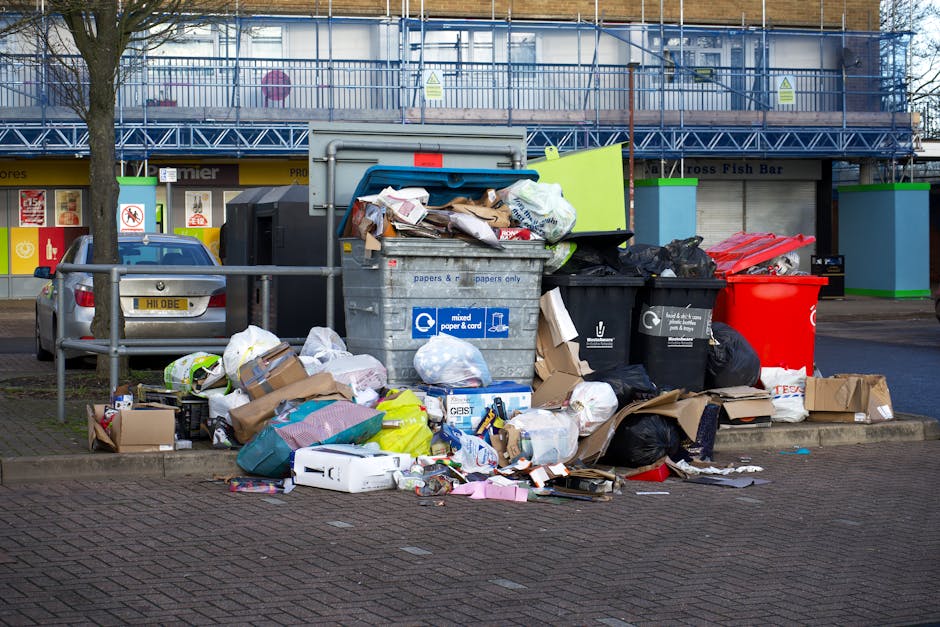
Commercial waste in Chalfont Saint Giles needs a practical, tidy and compliant approach, whether you are clearing routine office rubbish, disposing of mixed business refuse or arranging a one-off collection after a busy period. We provide a focused service for organisations that want waste removed without unnecessary disruption, with sensible attention to sorting, loading and responsible handover. The aim is straightforward: keep your premises workable while the waste is taken away in a controlled, professional way.
Our work covers common business waste streams such as everyday office rubbish, light bulky items, packaging, fixtures and general non-hazardous material from commercial premises. Where items need separating before disposal, we can handle that as part of the collection process. For businesses with items that require a different route, such as confidential paperwork or specialist waste, it is better to choose the service that fits the material rather than assume one collection type suits everything.
If you are comparing options, it helps to think in terms of what must leave the site, how quickly it needs to be cleared and whether any items need particular care during removal. Use the pages below to understand the main service areas, then send through the details you have when you are ready for a quotation.
Business waste removal for everyday commercial needs
Business waste removal suits organisations that generate recurring rubbish from desks, storage rooms, communal areas, light stock handling or small operational changes. It is a useful option when skips are not practical, when you do not want waste sitting on site for long periods, or when the quantity is enough to justify a direct collection rather than ad hoc trips to a disposal point. The work can include bagged waste, cardboard, packaging, broken non-hazardous fittings and mixed refuse that has been gathered for removal.
Where businesses want a broader overview of the service, the business waste removal page is the clearest starting point. For collections that are part of a wider clear-out or a larger property change, the general waste removal option may also be useful, especially if several different item types need to be handled in one visit. That way the scope can be matched to the material instead of forcing one route for every job.
What this type of collection is suited to
It is often chosen for offices, small workshops, professional premises, shared business spaces and storage areas where regular waste can build up over time. The service is intended for practical removal rather than a decorative tidy-up, so the focus stays on items that can be safely loaded, transported and passed into the right disposal or recycling route. If the waste includes specialist material, the collection should be planned around that from the outset.
Office clearances and workspace resets

Office clearance is usually about creating a clear working environment after a relocation, refurbishment, lease change or internal reorganisation. It can involve desks, chairs, filing units, storage items, monitors and general office clutter, as well as mixed rubbish gathered from cupboards and shared rooms. A sensible clearance makes the process manageable: keep reusable or retained items separate, identify the main waste categories and avoid mixing different responsibilities together unnecessarily.
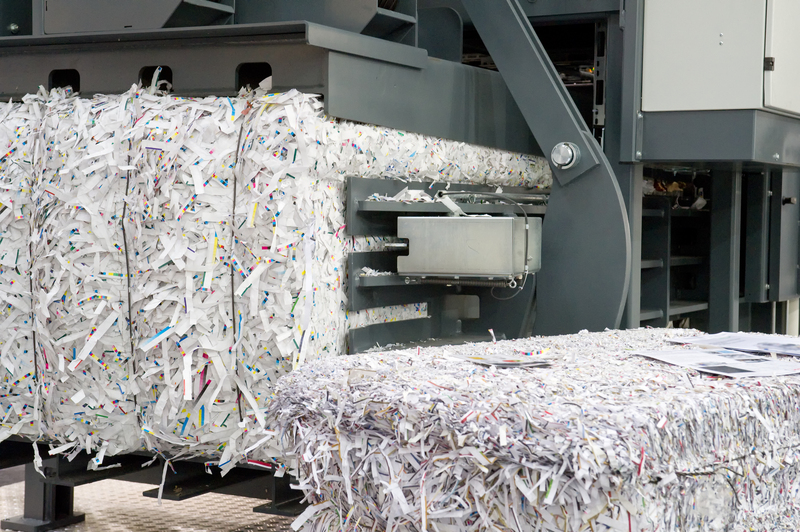
For a dedicated office-specific service, see the office clearance page. If the project includes confidential paperwork, that should be handled through a more suitable route such as confidential shredding, because ordinary waste removal is not the right answer for records that need secure destruction. Matching the page to the material helps avoid confusion and supports a cleaner handover of the items leaving the premises.
Office work can be organised around access, lifting and separation, but it does not need to become complicated. A brief inventory of the main items is usually enough to confirm the scale and the type of collection required. When you are comparing services, clarity about the items is often more useful than trying to describe the whole office in broad terms.
Clearances for furniture and bulky items
Bulky furniture often needs more careful handling than bagged waste because it is larger, heavier and less convenient to move through occupied premises. Desks, tables, filing cabinets, chairs, shelving and similar items may need dismantling or staged removal to get them out safely. A proper furniture collection keeps the process organised so that the items are removed without creating avoidable mess or obstruction in the property.
For stand-alone items or mixed lots of furniture, the most relevant pages are furniture clearance and furniture disposal. The distinction is useful: clearance suits a broader job where several pieces need removing together, while disposal is more specific when the priority is to move furniture out of the way and place it into the correct waste stream. Where seating is part of the load, the dedicated mattress and sofa disposal page may help if the items are mainly upholstered.
Furniture work is often easier when the main pieces are identified in advance and any access constraints are mentioned clearly. That allows the collection to be planned around doors, stairs, lifts and parking rather than discovered halfway through the job. A little preparation at the enquiry stage can save time on the day, particularly where several large items are involved.
Household-style clearances relevant to business premises

Some commercial properties contain domestic-style items as well as standard business waste, especially in mixed-use buildings, managed accommodation, staff rooms or properties being returned to an empty condition. In those situations a broader clearance may be more suitable than a narrow business-only collection. The goal is to remove the load in a logical way while keeping the property usable until the work is complete.
Relevant pages include home clearance, house clearance and flat clearance, depending on the type of premises and the kind of contents involved. These services are useful where the contents are more varied than simple business waste and may include a mixture of furniture, bags, household items and general clutter. The scope should follow the contents, not the other way around.
For rooms above ground floor, narrow hallways or shared access areas, planning matters as much as the waste itself. It is worth identifying whether anything must be carried through common parts, whether items can be broken down first and whether any rooms need to be cleared in sequence. That approach keeps the work orderly and makes the removal process easier to manage.
Special items, appliances and controlled waste
Not every object belongs in ordinary mixed waste. Some items need a specialist route because of their construction, contents or handling requirements. Fridges, freezers and similar appliances can involve materials that must be processed differently from everyday rubbish, while hazardous waste requires extra care and the right disposal pathway. It is best to separate these categories before arranging collection so the service can be matched correctly.
Useful supporting pages include fridge and appliance removal for white goods and other large appliances, plus hazardous waste disposal where the material is not suitable for ordinary handling. If the clearance also involves items that have been left in a garage or storage area, garage clearance may be a better fit for the broader job. The point is to sort the special items early rather than treat them as an afterthought.
We keep this aspect of the work practical and specific. If there is a special item among general waste, it should be identified clearly, because mixed loads are easier to deal with when the unusual pieces are known in advance. That helps avoid delays and allows the right disposal route to be chosen from the start.
Outdoor, storage and ancillary areas
Business waste is not always generated at a desk or counter. Storage rooms, rear yards, garages and garden-adjacent areas can collect old stock, broken equipment, packaging, offcuts and general junk that no longer serves the business. A targeted clearance of these spaces can restore usable storage, make access safer and remove material that has been left to accumulate out of sight.
For these situations, the relevant pages are garage clearance and garden clearance. They are useful where the area itself shapes the work, because outdoor and semi-outdoor spaces often contain a different mix of items from internal rooms. Garden clearance can also help where commercial grounds, access paths or service areas hold waste that needs to be removed as part of a wider tidy-up.
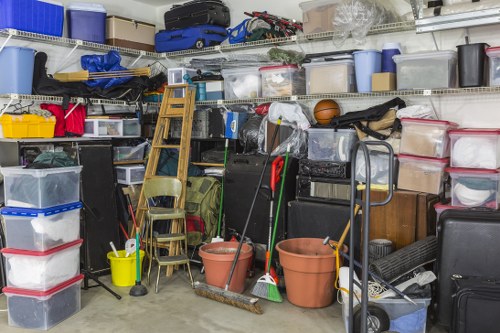
- Garages often contain mixed storage, tools and packaging that need sorting before removal.
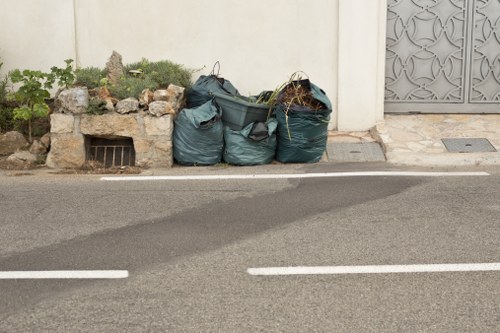
- Garden and yard areas may include branches, planters, old coverings or weathered junk.
- Ancillary spaces are often cleared best by grouping similar items together before collection.
Pricing, scope and quotation details

Quotation work is usually most accurate when it is based on the type of items, the amount to be removed, how accessible they are and whether any specialist handling is needed. A straightforward load of bagged waste will naturally differ from a collection that includes bulky furniture, appliances or mixed materials from several rooms. For that reason, the best approach is to describe the items clearly rather than simply asking for a price on a general “clear everything†basis.
Where you need a clear starting point, the pricing and quotes page explains the usual route for discussing scope before work begins. If you already know the waste is largely non-specialist and ready for collection, the main waste removal route may be enough to frame the request. Useful details include the kind of items, approximate volume, whether access is easy and whether anything needs dismantling or separate treatment.
To request a quotation, send a brief description of the waste and the property type. If you have photos or an item list, include them in one message so the scope can be reviewed efficiently. That makes it easier to match the collection to the right service and avoids unnecessary back-and-forth when the load is more varied than it first appears.
Recycling, sorting and responsible disposal
Responsible disposal is not only about removing waste from the premises. It also involves sorting material so that recyclable items, reusable items and general waste can follow the right route. Cardboard, some office materials, furniture components and selected non-hazardous items may be handled differently depending on their condition and composition. Clear separation at source helps the process stay orderly and avoids mixing items that are better treated apart.
For customers who want to understand how the service approaches material handling, the recycling and sustainability page is a useful reference point. It gives context to the way loads are managed once they leave site. In practice, that means the collection can be organised with an eye on what can be reused, recycled or passed on for appropriate processing, rather than simply bundled together without thought.
This is also where a little preparation makes sense. Keep the items you want removed in one area if possible, and separate anything that must stay behind. You do not need to overcomplicate the process, but a basic split between waste types can help the collection proceed more smoothly and keep the job focused on the right material.
About Chalfont Saint Giles
Chalfont Saint Giles is a village in Buckinghamshire, situated among the Chilterns west of London and close to the valleys and wooded landscapes that characterise the wider district. The village has an established historic core with a compact centre, older streets and buildings that reflect its long settlement history. One of its best-known associations is with John Milton, whose cottage is preserved in the village and provides a direct link to the poet’s later life. That connection gives the place a notable literary dimension alongside its everyday village character. St Giles’ parish church is another important landmark, and the churchyard and surrounding streets help define the traditional centre. The village sits within a wider network of lanes, open countryside and nearby settlements, which has shaped its identity as a relatively small place with strong local distinctiveness. While the built form is modest compared with larger towns, the landscape setting is significant: hedgerows, mature trees and rolling ground are all part of the visual impression. Public spaces, village facilities and small-scale commerce sit within that historic framework rather than replacing it. The result is a place that feels rooted in older Buckinghamshire patterns while still functioning as a modern residential community.
Home, loft and household-style spaces within commercial properties
Some business premises contain loft spaces, back rooms, storage cupboards or domestic-style areas that gradually fill with items no longer needed. These spaces often need the same steady, organised approach as a house clearance, because the contents are mixed and may include old furnishings, archive boxes, broken household items or general clutter. A careful clearance helps restore access and makes it easier to use the area properly again.
The most relevant pages for these jobs are loft clearance, house clearance and home clearance. They are especially useful when the area contains a combination of domestic and business-style material. If the items are largely furniture or bulky objects, the furniture pages may be more appropriate; if the task is mainly about opening up storage space, loft or home clearance may fit better. Matching the service to the space helps set a realistic scope.
Good results usually depend on separating retained items from waste before the collection begins. A labelled pile, box grouping or room-by-room approach can make the process much cleaner. It also helps if you know whether there are items that need specialist disposal or confidential handling, because those should be identified before the main clearance starts.
How to plan a practical collection
Planning does not need to be complicated, but a few simple steps make commercial waste collections easier to manage. Start by grouping items in one place if possible, then note any heavy pieces, awkward access points or objects that may need to be dismantled. If the property is occupied, make sure the route out of the building is clear. If the premises are being emptied, identify anything that must remain on site so it is not removed by mistake.
When you are ready to enquire, use the most relevant page as your starting point and give a short description of the load. If the job involves a broader property reset, the book online page may be useful as the clearest route to make contact. A concise note about the waste type, approximate volume and access arrangements is usually enough to begin the quotation process. Accuracy here is more helpful than length.
For final arrangements, keep the message practical: what needs removing, where it is located and whether any items are unusual. Then ask for a quotation in plain terms. If your load includes mixed furniture, office waste or appliance items, mention that from the outset so the response can reflect the actual scope rather than an assumption.